Honoring the dispatchers who keep the system safe
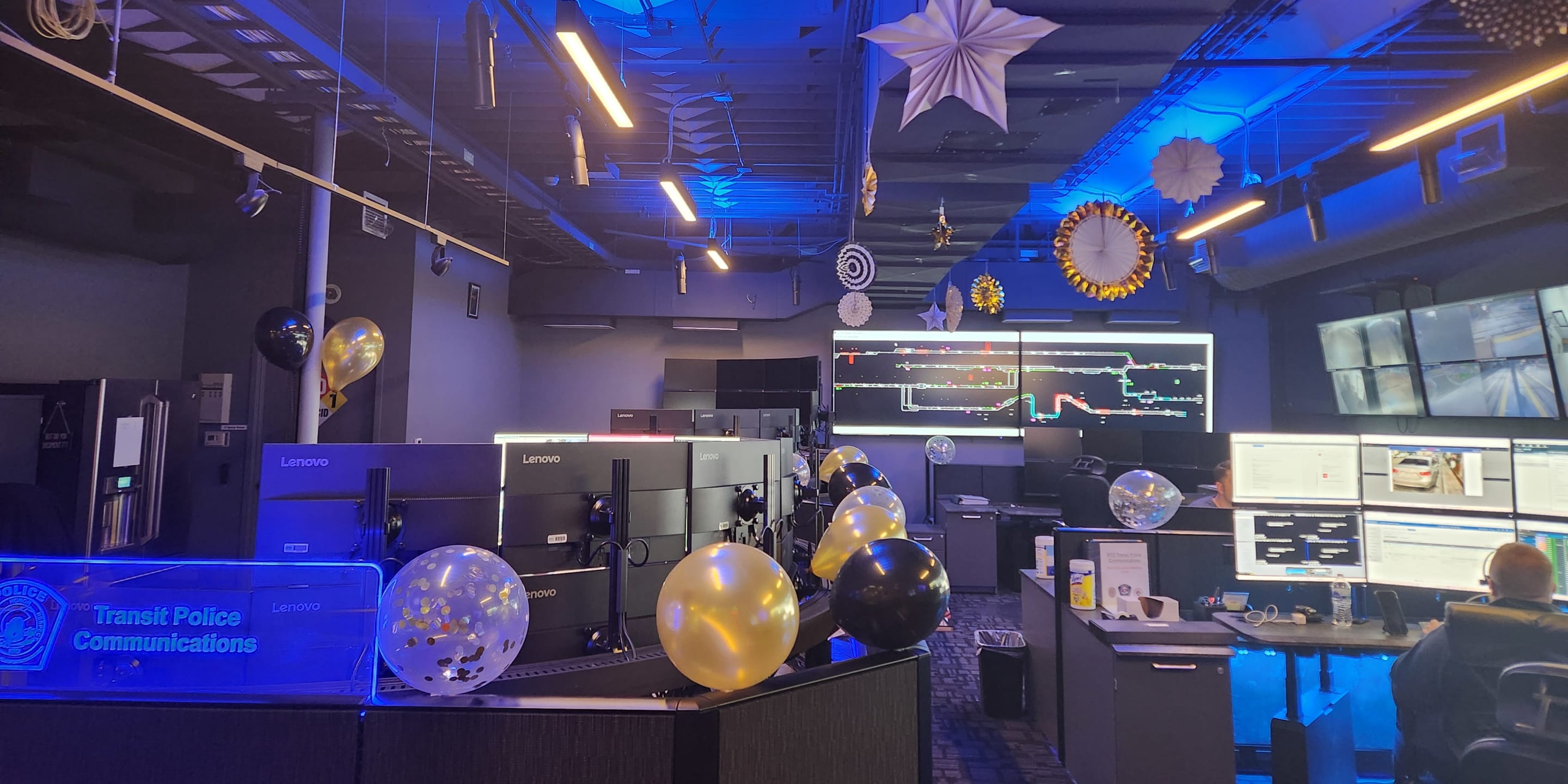
During National Public Safety Telecommunicators Week, RTD celebrates police dispatchers who field customer and employee calls for service 24/7
When customers contact Transit Watch to report suspicious behavior or unsafe activity, the first people who respond are RTD’s police dispatchers. These dispatchers field communications around the clock to support customers and RTD employees across the service area. Public Safety Telecommunicators Week, which began April 12, recognizes dispatchers for their crucial, behind-the-scenes role in assisting the community every day of the year.
"Working as a public safety dispatcher gives me an opportunity to connect directly with the community so that I can help build trust in RTD. Being able to work with the public and solve their issues or help them in a time of need is incredibly rewarding," said RTD Public Safety Dispatcher Ryan Gerard.
“Through our efforts in providing a safer environment for customers, we get to see the effects firsthand in knowing change was made possible by our service,” added Public Safety Dispatcher Richard Hayes.
High volume, high responsibility
In 2025, RTD dispatchers fielded more than 68,000 communications, including calls, texts, and radio communications that come into the dispatch center. Most calls are from Transit Police officers who are patrolling and conducting security and welfare checks as well as non-emergency calls from customers. Dispatchers log calls to reflect one of 80 different call types that may come in that also include trespassing, disorderly conduct, alarms, fires, and noise complaints, and other personal safety concerns.
The busiest times coincide with peak commuting times, Monday through Thursday 6-10 a.m. and picking up again at 4 p.m.
While the number of total security-related calls that came into the dispatch center decreased overall in 2025, the workload has not. With the Transit Police Department expanding to more than 100 sworn officers, dispatchers are supporting greater field activity.
“The expanded responsibilities placed on Transit Police officers also create additional tasks for dispatchers,” explained RTD 911 Operations Manager Michelle Lawrence. “Supporting a full-service police department requires significantly more research, information gathering, notifications, and collaboration, along with the integration and management of numerous systems that support sworn officers.”
Tools that strengthen safety
Public safety dispatchers use roughly 20 systems to conduct their work, including internal record systems to determine if acustomer has had prior contact or suspensions on RTD property, live look-in cameras when an operator or customer makes a report through Transit Watch, and the LexisNexis database to retrieve vehicle information or obtain the registered owner’s phone number for an abandoned vehicle in a parking lot, for example.
Gathering information from a variety of systems for emergency and non-emergency calls provides opportunities for cross-agency collaboration. “I will coordinate with officers and partner agencies to ensure a safe and effective response. In my role I get to support RTD's values and maintain a safe transit environment for the communities we serve," said dispatcher Ian Weir.
NextRide is another tool public safety dispatchers regularly use when a customer may need help in identifying their location reported Lead Public Safety Dispatcher Spencer Sedbrook. The app’s real-time tracking of buses and rail lines on a map that helps customers see when they will arrive also enables dispatchers to track a vehicle.
Coordination and trust
RTD dispatchers express appreciation for their work and one another. "This is an ever-changing role; no two shifts are the same, no two calls are the same,” said Public Safety Dispatcher Mary Cruz. “We are constantly learning and growing as a team to better ourselves and enhance the service we provide to our fellow RTD employees and the community,"
“What makes dispatching special is that you’re constantly solving problems in real time,” added dispatcher Micheal Finnell. “No one does this job alone. It takes coordination, trust, and constant collaboration across departments to respond effectively in the moment.”
Dispatcher training and certification
RTD police dispatchers are skilled employees who complete two certifications and undergo at least 36 hours of continuing education each year. The Public Safety Telecommunicator class lasts six weeks followed by a second four-week Law Enforcement Communications class to become certified. Each class is administered through the Association of Public Safety Communications Officials. All police dispatchers learn how to de-escalate a variety of situations prior to officers arriving on site.
Contacting the RTD Transit Watch public safety dispatchers
If customers see unsafe activity, they can report it to RTD Transit Police dispatch center, 24/7, in one of several ways:
- Contact RTD Transit Police using this digital form
- Call: 303.299.2911
- Text: 303.434.9100
- For emergencies, customers should contact 911.