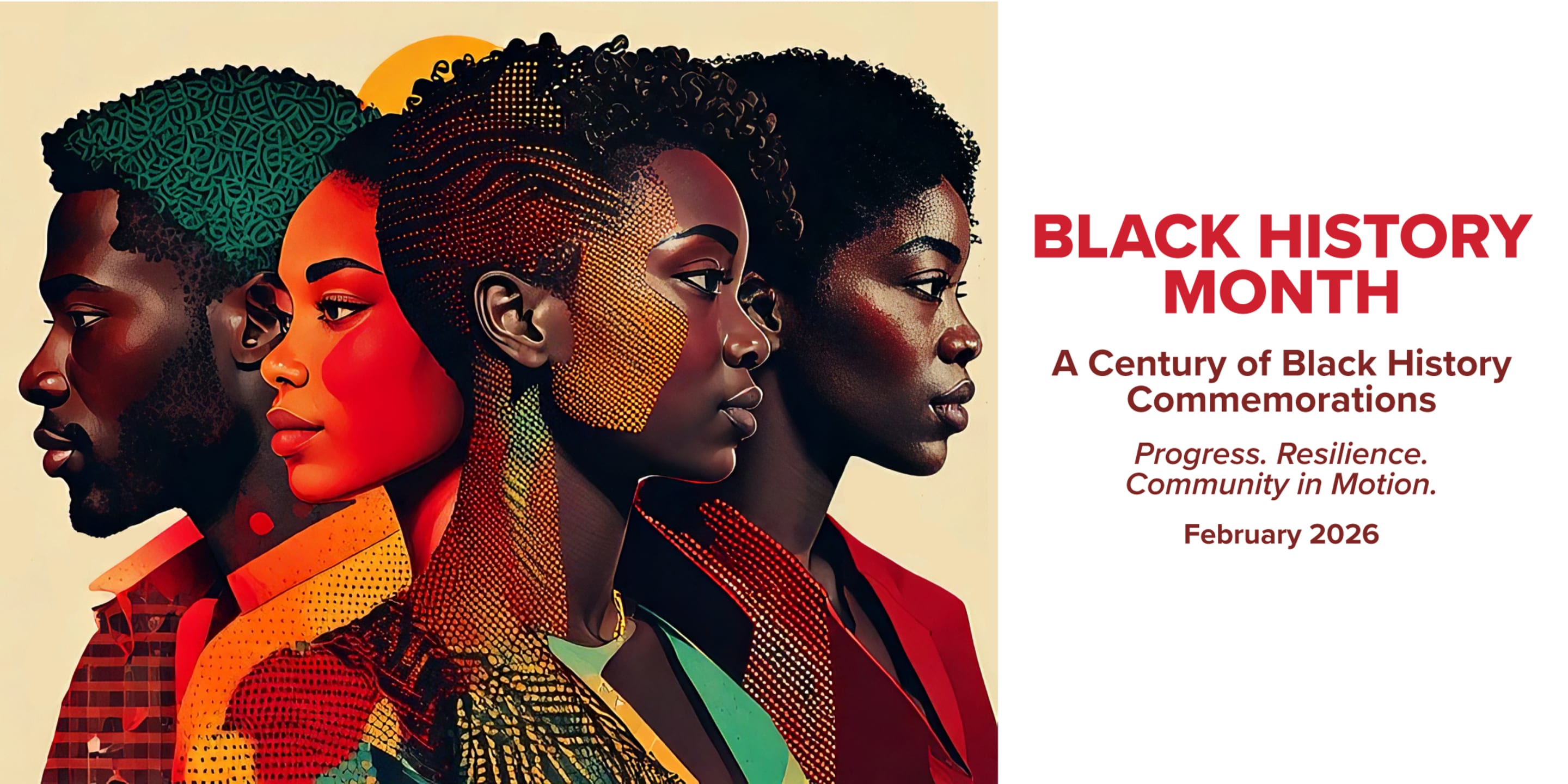
A Century of Black History Commemorations: Black transportation pioneers in Colorado’s public transit legacy
The 2026 Black History Month theme, A Century of Black History Commemorations, marks 100 years since the establishment of what began as Negro History Week in 1926— an effort to ensure that Black history, contributions, and leadership were neither erased nor marginalized. This centennial celebration invites reflection not only on the past but also on how institutions carry forward the lessons of history into present-day practice.
Public transportation has long been intertwined with civil rights, workforce equity, and access to opportunity. As a regional public transit provider, RTD operates within a legacy shaped by Black transportation pioneers who challenged exclusionary policies, expanded employment access, and advocated for equitable mobility. Honoring a century of Black history commemorations requires recognizing how those pioneers — particularly in Colorado — helped shape the legal, policy, and community foundations upon which today’s public transit systems are built.
Transportation is more than movement; it is a gateway to education, employment, health care, and civic participation. By examining Black transportation leadership through this centennial lens, Black History Month becomes both a moment of remembrance and an opportunity for public institutions like RTD to reaffirm their responsibility to serve communities equitably and inclusively.
Transportation and civil rights in Colorado
Colorado’s rapid growth during the mid-20th century made public transportation essential for working-class communities, including Black residents concentrated in neighborhoods such as Denver’s Five Points. Yet, like many systems nationwide, transit development was influenced by broader inequities — ranging from exclusionary employment practices to infrastructure decisions that failed to center marginalized communities.
Black leaders, transit workers, and community advocates in Colorado responded by advancing inclusive access, fair employment, and community-centered planning. Their efforts shaped the environment in which regional transit systems later emerged and reinforced the role of public transportation as a civil rights issue.
Marlon Green: Precedent-setting equity in transportation employment
Marlon Green’s landmark civil rights case in Colorado transformed transportation employment nationwide. After being denied airline pilot positions solely because of his race, Green pursued legal action that culminated in the 1963 U.S. Supreme Court decision Colorado Anti-Discrimination Commission v. Continental Air Lines. The ruling affirmed that transportation employers could not evade state anti-discrimination laws — setting a precedent that extended beyond aviation.
For public transportation agencies, including RTD, this decision reinforced the principle that transportation systems — whether in the air or on the ground — must uphold equal opportunity in hiring, advancement, and workplace protections. This legal foundation continues to inform how public transit agencies structure civil rights compliance and workforce equity efforts today.
Elvin R. Caldwell Sr.: Public transit, community institutions, and lasting legacy
Elvin R. Caldwell Sr., Denver’s first Black city council member understood public transportation as a cornerstone of community access and economic opportunity. Throughout his public service, Caldwell advocated for equitable infrastructure investment and transit connectivity that served historically marginalized neighborhoods rather than isolating them. His leadership helped elevate transportation equity within local governance and influenced how Denver approached access to public services.
Caldwell’s impact extended beyond public office. He shares his namesake with fellow civil rights leader Omar Blair through the Blair-Caldwell African American Research Library, located on historic Welton Street in Five Points. The library serves as a living archive of Black history, culture, and civic leadership in Colorado — situated along a corridor long shaped by transit access and community movement.
In addition to his civic leadership, Caldwell’s son, Elvin Caldwell Jr., became the founder of Caldwell Kirk Mortuary, one of Denver’s most enduring Black-owned businesses. The mortuary functioned not only as a business but also as a trusted community institution, reinforcing Caldwell’s belief that economic stability, civic presence, and access — including transportation — were deeply interconnected.
Connecting history to RTD’s present-day initiatives
The legacy of Black transportation pioneers is reflected in how RTD approaches equity, access, and accountability across its programs, policies, and community-facing initiatives. These efforts demonstrate how historical advocacy continues to inform contemporary public transportation practice.
Transit Equity Day and Zero Fare initiatives
RTD’s annual observance of Transit Equity Day, including systemwide zero-fare service on Feb. 4, directly acknowledges the civil rights history of public transportation. By removing fare barriers for a full service day, RTD underscores the role of transit as a public good and recognizes how access to mobility has historically shaped economic and social opportunity — particularly for Black communities.
Civil Rights Division compliance, oversight, and outreach
RTD’s Civil Rights Division oversees compliance with federal and state nondiscrimination laws across employment, contracting, and service delivery. This work includes monitoring Title VI obligations, Disadvantaged Business Enterprise (DBE) participation, and equitable service standards. These protections are rooted in the same legal foundations advanced by pioneers such as Marlon Green, whose case affirmed that transportation employers are accountable to anti-discrimination laws. RTD’s outreach efforts further extend this work by engaging small businesses, community organizations, and customers to ensure awareness of civil rights protections and opportunities.
Community engagement and listening sessions
RTD conducts structured community engagement efforts — including listening sessions, public forums, and partnerships with community-based organizations — to incorporate lived experience into transportation planning and decision-making. These engagements are especially critical in historically marginalized neighborhoods, reflecting the advocacy of leaders like Elvin R. Caldwell Sr., who championed the principle that public infrastructure should be shaped with communities, not simply for them. Through these efforts, RTD gathers feedback that informs us about service changes, accessibility improvements, and long-term planning.
Accessibility and ADA-focused initiatives
RTD’s ADA-focused programming addresses mobility barriers experienced by customers with disabilities while recognizing the intersection of race, disability, and economic access. Initiatives include accessible vehicle design, paratransit services, operator training, and collaboration with disability advocacy organizations. By embedding accessibility into both planning and operations, RTD reinforces the principle that equitable transportation must account for overlapping forms of exclusion that have historically limited access for many Black customers and communities. Collectively, these initiatives reflect how the legacy of Black transportation pioneers continues to shape public transportation today, transforming historical struggles for access and fairness into ongoing institutional responsibility.
Celebrating Black History Month with RTD
In recognition of Black History Month, RTD encourages employees and community members to engage in opportunities for learning, reflection, and connection throughout the region. The following events and cultural spaces highlight Black history, leadership, and creativity in Colorado and beyond. RTD customers are encouraged to use the Next Ride app to plan travel to these events.
Colorado Humanities Mary Fields in Black History Live | Noon-2 p.m. Feb. 5 | 595 S Clinton St, Auditorium, Denver | Presented by Colorado Humanities, “Black History Live” is an annual statewide program that brings African American history to life through immersive storytelling. The 2026 tour features nationally acclaimed scholar and actor Becky Stone portraying Mary Fields, alongside scholar and actor Marvin Jefferson as York. This living-history performance highlights the enduring contributions of African Americans to art, culture, public service, education, and human rights.
Denver Performing Arts Center: Godspeed | 7 p.m. Feb. 5 | 1101 13th St., Denver | Join the Denver Center for the Performing Arts for a special Black History Month celebration featuring the world premiere production of “Godspeed.” Following the performance, attendees are invited to a post-show talkback with playwright Terence Anthony and director Delicia Turner Sonnenberg, offering insight into the themes, creative vision, and cultural significance of this original Western.
Juanita Gray Community Service Awards & Blacks in Colorado Hall of Fame Ceremony | 1:30 p.m. Feb 7 | 10 W 14th Ave., Denver | Held annually at the Denver Central Library, this event honors Black individuals and youth for their significant contributions to Colorado’s communities. The ceremony celebrates civic leadership, service, and legacy through the Juanita Gray Community Service Awards and inductions into the Blacks in Colorado Hall of Fame.
Black American West Museum & Heritage Center | 3091 California St., Denver | Throughout February | Community members are encouraged to visit the Black American West Museum & Heritage Center, which preserves and shares the history of African Americans in the American West. Throughout February, the museum offers impactful exhibits highlighting Black pioneers, artists, entrepreneurs, and civic leaders whose stories continue to shape Colorado’s cultural landscape.
Continuing the work of equitable mobility
A century of Black History commemorations affirms that progress in transportation equity has been driven not only by individual leaders, but by the collective courage of Black communities who challenged exclusion, organized for fairness, and asserted their right to move freely and safely through public space. Across Colorado, Black residents, workers, advocates, and community institutions shaped transportation systems through everyday acts of resistance, resilience, and persistence, whether by demanding fair employment, advocating for accessible routes, or ensuring their neighborhoods remained connected to opportunity.
For RTD, honoring this legacy means recognizing that public transportation has always been intertwined with community advocacy and lived experience. The history of transit in Colorado reflects the enduring contributions of Black communities whose advocacy, leadership, and vision helped shape transportation systems that expanded access, strengthened community connections, and reinforced the role of mobility in supporting economic opportunity, education, and civic life.
As RTD continues to connect people to opportunity through public transit, Black History Month serves as a moment of reflection and responsibility — linking the collective advocacy of the past to present-day action. By acknowledging the enduring contributions of the Black community, RTD affirms that equitable transportation is not static, but an ongoing commitment shaped by the people and communities it serves.
Diversity Spotlight celebrates the diversity of RTD employees and the larger community that RTD serves and fosters an appreciation of our social and cultural similarities and differences. Diversity Spotlight supports RTD’s values of passion, respect, diversity, trustworthiness, collaboration, and ownership.