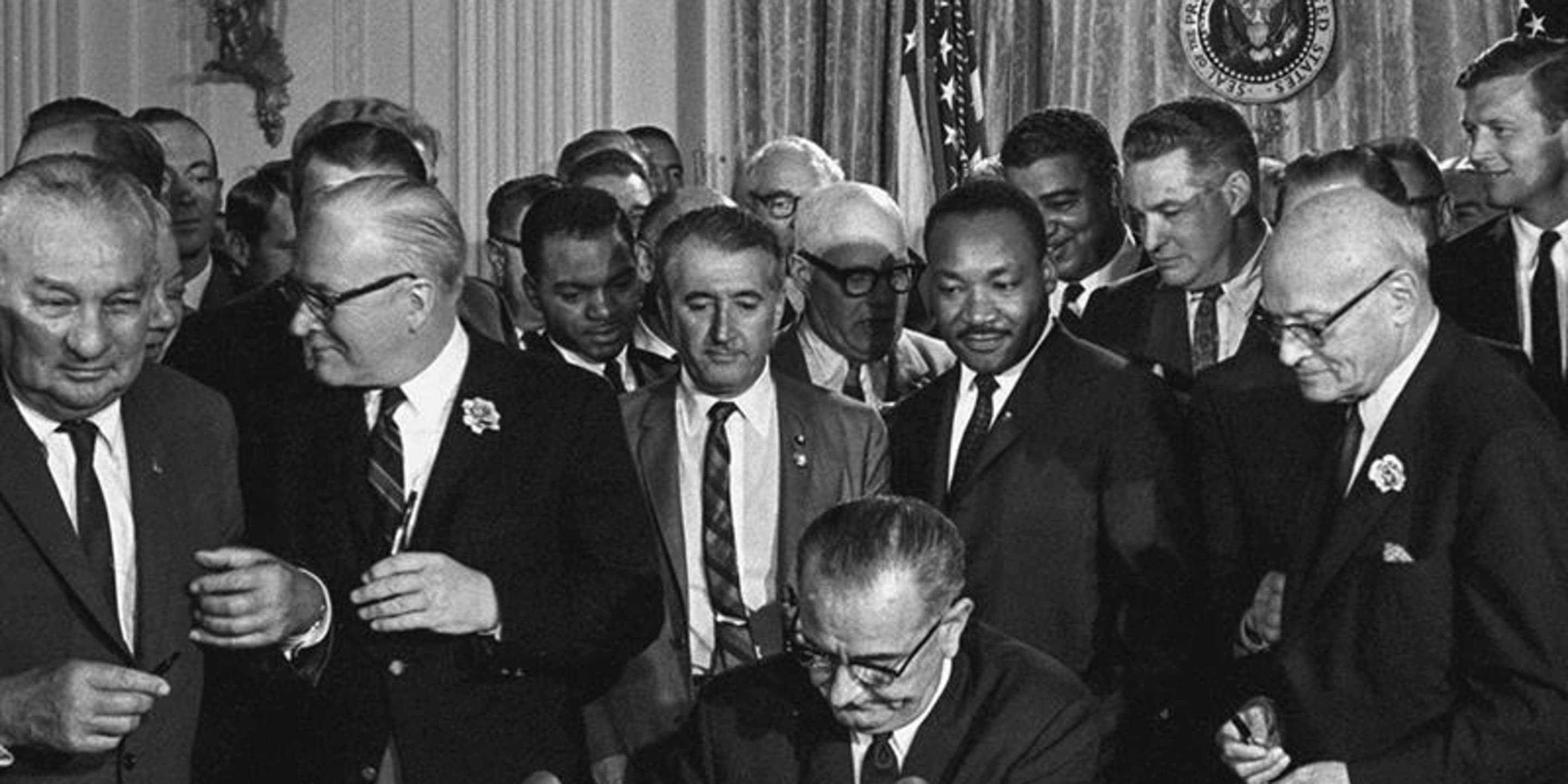
Diversity Spotlight: How the Civil Rights Act of 1964 shaped transportation equity
July 2, 2026, marks the 62nd anniversary of the Civil Rights Act of 1964, a landmark law that transformed our nation by prohibiting discrimination based on race, color, religion, sex, or national origin. Signed into law by President Lyndon B. Johnson, the Civil Rights Act represented a defining moment in the pursuit of equality, helping ensure that all individuals can participate fully in American society.
The Civil Rights Act was the result of the courage, persistence, and advocacy of countless individuals who challenged injustice and demanded equal treatment under the law. Their efforts helped shape a more equitable future and continue to inspire the work of organizations across the country today. More than six decades later, the principles embodied in the Civil Rights Act continue to guide the work of public agencies across the country, including RTD.
As a public transportation provider, RTD recognizes that mobility is more than moving people from one place to another. Access to reliable transportation connects individuals to employment, education, healthcare, housing, recreation, and community. Through a variety of programs, policies, and initiatives, RTD works to advance fairness, accessibility, inclusion, and opportunity for the communities we serve.
Expanding access through affordable transportation
Transportation affordability remains an important equity issue. RTD is committed to reducing financial barriers to mobility through programs that help connect people to employment, education, healthcare, recreation, and essential services.
RTD's LiVE Fare Discount Program provides reduced fares for income-qualified customers, making public transportation more affordable for individuals and families throughout the region. RTD also supports young people through its Zero Fare for Youth program, which allows youth ages 19 and younger to ride RTD services at no cost. By eliminating fare barriers for young customers, the program helps increase access to schools, after-school activities, jobs, healthcare, and other opportunities that contribute to long-term success and independence.
In addition, RTD proudly observes Transit Equity Day each year on Feb. 4 in honor of civil rights icon Rosa Parks. On this day, RTD provides systemwide zero-fare service across bus, rail, FlexRide, Access-a-Ride, and Access-on-Demand services, reinforcing the connection among transportation, civil rights, and equitable access to opportunity.
Together, these initiatives reflect RTD's commitment to ensuring that cost is not a barrier to mobility and that all community members have access to the opportunities and resources that transportation makes possible.
Promoting equity in transit planning and investment
The Transit Equity Office works to ensure that RTD's services and investments are delivered equitably across the region. Through the agency's Title VI Program, RTD evaluates major service changes, fare adjustments, and transit investments to help ensure they do not disproportionately impact minority or low-income communities.
A recent example of this work was RTD's Title VI Equity Analysis conducted as part of the August 2025 Service Changes. Using demographic, ridership, and customer survey data, RTD assessed how proposed service changes could affect Black, Indigenous, and People of Color (BIPOC) and low-income communities. The analysis found that seven of the nine major service increases benefited areas with higher concentrations of BIPOC customers, while eight of the nine major service increases served areas with higher concentrations of low-income customers. The analysis demonstrated RTD's commitment to making data-informed decisions that promote equitable access to transportation and opportunity.
RTD also advances equity through its 2025-2028 RTD Language Access Plan, which provides translated materials, interpretation services, multilingual outreach, and language assistance resources so customers with limited English proficiency can meaningfully engage with RTD programs and services. Additionally, RTD's Equitable Transit-Oriented Development (eTOD) policy, updated in 2025, supports affordable housing and community-serving development near high-frequency transit corridors, helping connect residents to jobs, education, healthcare, and other essential destinations.
Creating opportunities through community engagement
The Civil Rights Act affirmed that all individuals should have a voice in the decisions that affect their communities. At RTD, meaningful community engagement remains a cornerstone of equitable public service.
Through public meetings, surveys, advisory committees, outreach events, and partnerships with community-based organizations, RTD actively seeks feedback from the diverse communities it serves. These efforts include engaging with historically underserved populations, including individuals with disabilities, low-income communities, older adults, youth, and individuals with limited English proficiency. Altogether, they support an agencywide commitment to transparency, accessibility, and inclusive decision-making by ensuring community voices help inform transit planning, service changes, accessibility initiatives, major capital investments, and customer experience improvements.
RTD's Customer and Community Engagement Report, released monthly, highlights the agency's commitment to connect with customers and stakeholders throughout the district. In 2024 alone, RTD engaged 39,249 customers through a variety of outreach and engagement activities. These efforts created opportunities for community members to share their experiences, concerns, and ideas while helping inform agency priorities and decision-making.
Programs such as Gabbing with Gabe and Gisa, service change outreach, Title VI engagement efforts, public meetings, and partnerships with advocacy organizations and community groups exemplify RTD's commitment to meeting communities where they are and incorporating public input into agency decisions.
Building an inclusive workplace
The principles of the Civil Rights Act extend beyond the services RTD provides and into the workplace culture it strives to create for its employees. RTD is committed to fostering an environment where all employees are treated with dignity, respect, and fairness, and where individuals have equitable opportunities to contribute, develop, and succeed.
Under Title VII of the Civil Rights Act of 1964, RTD's Equal Employment Opportunity (EEO) Office helps ensure a workplace free from discrimination and harassment based on race, color, religion, sex, age , and national origin. The EEO Office promotes equal employment opportunities through training, policy implementation, complaint investigation, and collaboration with employees, managers, and federal, state, and local partners.
RTD also supports an inclusive workplace through programs, policies, and benefits that recognize and respect the diverse identities and experiences of its workforce. Employees have access to professional development opportunities, wellness resources, employee assistance programs, workplace accommodations, and benefits that support employees and their families.
By fostering a culture grounded in respect, accessibility, accountability, and opportunity, RTD continues to uphold the spirit of the Civil Rights Act and strengthen its commitment to serving both its workforce and the communities that rely on public transportation.
Continuing legacy
The Civil Rights Act of 1964 serves as a reminder that equity, access, and opportunity require ongoing commitment and action.
RTDhonors the legacy of those who fought for civil rights by striving each day to provide equitable transportation services, meaningful community engagement, and opportunities that help all people connect to the places and resources they need to thrive. As the agency commemorates this historic anniversary, RTD reaffirms its commitment to serving its customers, employees, and communities with fairness, dignity, and respect.