Gas prices a drag? Get a lift from RTD
With one of the largest service areas in the nation, RTD transit brings affordable travel options within reach
If seeing the total cost at the gas pump brings unwelcome sticker shock or spurs more calculated travel plans to conserve gas, it’s time to get a lift from RTD. With a variety of fare options ranging from a few hours to a full-day or a monthly pass, budget-friendly transit helps meet your travel needs to more places than you might have known.
RTD’s 3-Hour pass is $2.75 while a Day pass is $5.50 and enables unlimited trips in a 24-hour period. Each is a better value than the roughly $4 a gallon gas price in Denver and on average statewide in April. Those eligible for discounted fares can save even more.
The American Public Transportation Association (APTA) reports individuals can save more than $13,000 a year by using public transit rather than driving their own vehicle. This figure is based on the price of gas, the increasing costs of maintenance and insuring a vehicle, and parking costs.
While the price of gas changes day to day, RTD fares remain steady, with fares reduced systemwide in January 2024.
Transit vs. driving
A 60-mile round-trip commute would cost an estimated $8.28 total with gas priced at $4 a gallon and for a vehicle that gets 29 miles per gallon. The same trip via an RTD Day Pass would be $5.50 – or at no cost for active-duty U.S. military and those aged 19 and under – helping families and students be undeterred from getting around town because of gas prices.
After a year of commuting 60 miles round-trip five days a week – or 260 days total a year – the total cost of gas would be $2,153 for using one’s own vehicle versus $1,430 using RTD. That’s a savings of $723 a year – or $2.78/day – before even considering parking, maintenance, car insurance, and wear‑and‑tear.
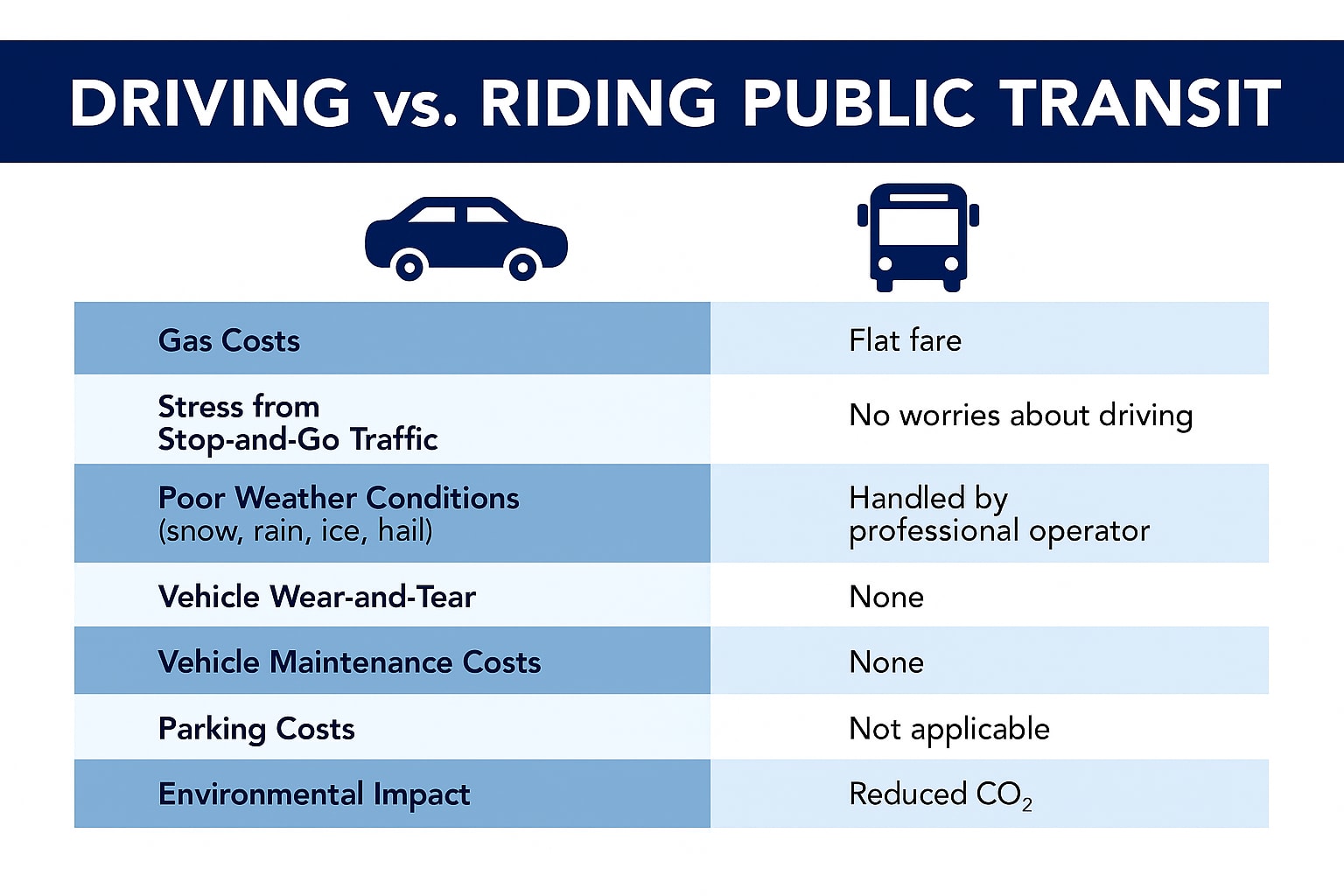
The break-even point of taking transit is 40 miles of round-trip travel – all else remaining the same – but not accounting for vehicle maintenance, parking costs, the stress of driving in poor weather conditions, or the emotional and mental toll of time spent in stop-and-go, congested driving situations.
See the savings
To compare the exact costs of a trip using RTD instead of your vehicle in the agency’s service area, this Fuel Savings Calculator is available from the Public Transportation Gets Us There page.
Simply input:
- your vehicle’s miles per gallon
- the price of gas per gallon
- the number of miles in round-trip travel
- any parking costs
Compare the journey to taking the trip using RTD for an annual pricing comparison to see the savings against RTD fare options.
Besides cost savings, the luxury of not having to navigate bumper-to-bumper traffic to reach your destination makes for a more stress-free experience while helping to reduce the impact to overall CO2 emissions. Cutting a single 30-mile round-trip commute removes more than 20 pounds of CO2, according to smartcommute.org.
Where does RTD go?
With notable transit s going to Boulder and downtown Denver, RTD’s service spans eight counties and 40 municipalities. Here's where the system reaches:
- North: Eastlake•124th Station serving east Thornton and bus routes in Longmont
- South: Lone Tree’s RidgeGate Parkway Station in Douglas County
- East: Aurora, nearing Watkins, on Route 15L (East Colfax Limited) and the Denver Airport Station via the A Line
- West: Golden, Evergreen, Nederland, and Pine Junction
In addition, RTD regional and neighborhood routes are available to get customers to school, work, medical facilities, and other locations.
If you’re unsure whether there’s a bus or train heading to or nearby your destination, use RTD’s Next Ride app for travel planning. Simply input your starting point, destination, and arrival or departure time to populate viable transit options. If you need help navigating RTD’s service area or help with trip planning, Customer Service can assist at 303.299.6000.
Park-n-Rides to make transit more accessible
RTD Park-n-Rides are available to help you more easily connect to transit services.
- Parking is free for up to 24 hours for vehicles registered in district and $2/day thereafter.
- For those who live outside of the service area, parking would cost $4/day.
More information about Park-n-Rides and the ability to check on parking fees in advance is available here.
With warmer weather here, Bike-n-Ride, is another option for making access to a bus or rail station within reach.
For a real-world account of navigating the metro using only transit visit "No car, no problem" here.
Service area details
Because RTD’s service area is vast, a more complete rundown of the system’s boundaries can help you envision how you can incorporate transit into future trips.
North
The Northern service area extends as far as US 287 and 21st Avenue Park-n-Ride in Longmont served by routes 324,326, 327, BOLT, and LD1 as well as the 8th and Coffman Park-n-Ride served by routes 323, 324, 326, 327, BOLT, LD1, LD3, and LX2. Eastlake•124th Station is the northernmost area served by the N Line.
South
RidgeGate Parkway Station is the agency’s farthest southern destination via the E Line, and starting with June’s upcoming service changes, the R Line. Bus service extends into Douglas County’s Highlands Ranch via Route 483 traveling from Parker Road to Lincoln Avenue. The Pinery Park-n-Ride is served by Route PD with services operating during rush hour, morning and late afternoon to early evening.
East
The H and E lines serve Florida Station in Aurora with the furthest eastern bus routes including Route 120L and Route 520 to US 85 and Bridge Street Park-n-Ride serving Brighton in Adams County.
West
The farthest Western RTD rail service is served by the W Line in Golden and regional Route GS. Western Park-n-Rides and bus routes are available as far west as Nederland (Route NB), Pine Junction (Route CV), and Evergreen Park-n-Ride (Route EV). Route 17 travels from Golden to the Federal Center Station via Oak Station.
For a complete look at the service area, refer to RTD’s system map.
Comparing RTD’s service area nationally
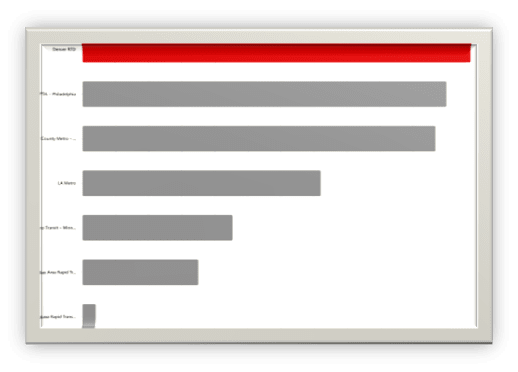
Beyond cost savings, RTD’s extensive coverage means you can reach more destinations without worrying about gas prices.The agency operates one of the nation’s largest transit service areas in the U.S. – larger than Los Angeles Metro, Dallas Area Rapid Transit, and Bay Area Rapid Transit. Other national transit agencies reach smaller, though concentrated service areas.
Here’s where RTD ranks nationally:
- Bay Area Rapid Transit: 80 square miles
- Dallas Area Rapid Transit: 700 square miles
- Metro Transit – Minneapolis – St. Paul: 907 square miles
- LA Metro: 1,440 square miles
- King County Metro– Seattle: 2,134 square miles
- SEPTA – Philadelphia: 2,200 square miles
- Denver RTD: 2,345 square miles
What are you waiting for? Plan your trip
Ready to see how much you can save? With an extensive service area to get where you need, RTD can help you travel or commute to more places across the metro area than you might have known.For help with trip planning or questions about making connections, Customer Care agents are available seven days a week at 303.299.6000.
Here’s to more money in your pocket and a safe and comfortable journey ahead!