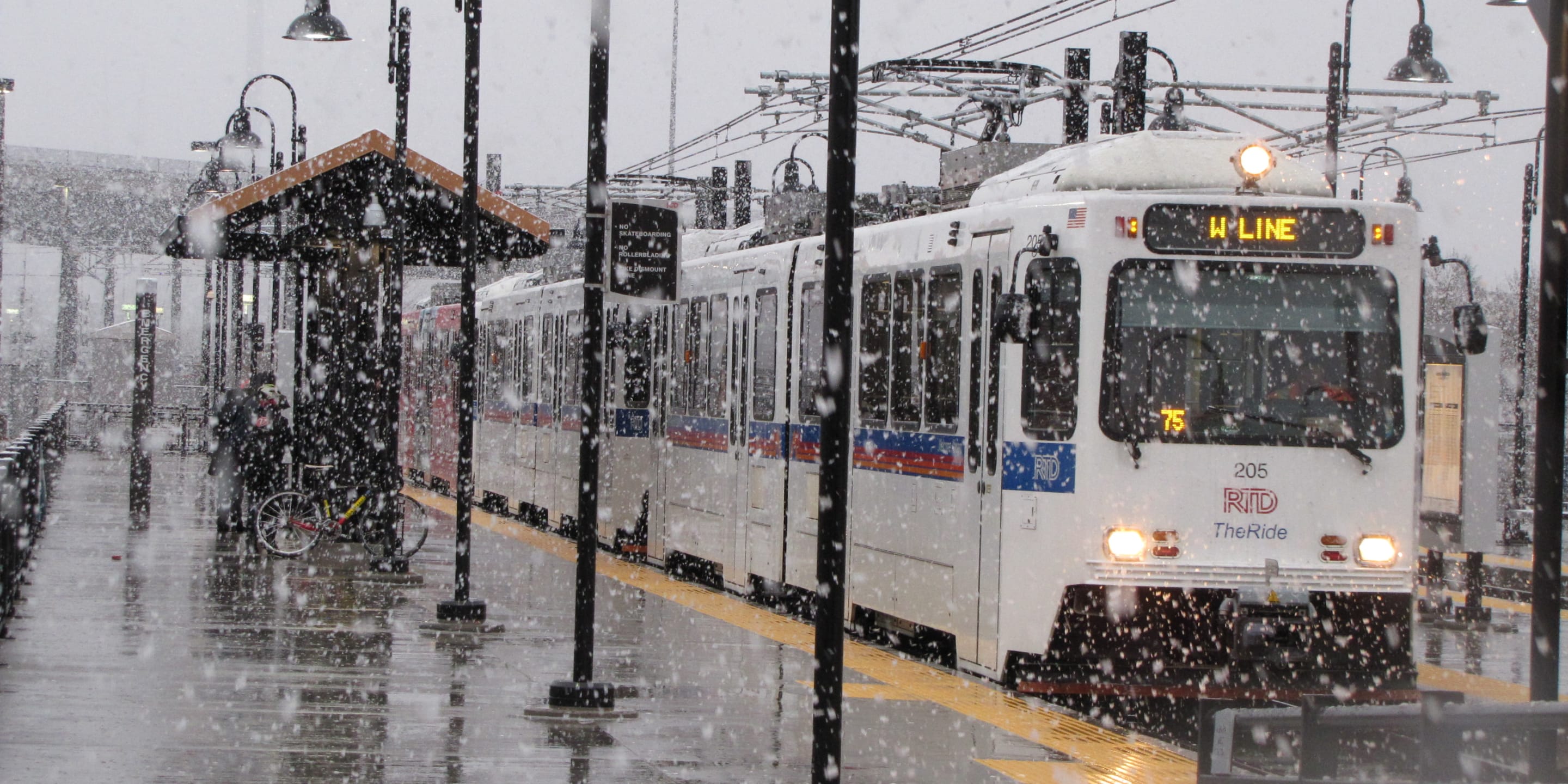
Take a peek inside RTD’s winter prep for rail
Customers rely on RTD regardless of the weather. In part two of this winter preparation series, learn the techniques the agency uses to de-ice train systems and more
Winter weather requires expert preparation to keep RTD trains moving through ice and snow. While RTD has a Snow Desk which focuses on situational street conditions for its bus fleet, an equally coordinated effort happens across the rail network. The goal is the same: keep customers and operations safe regardless of the weather.
Winter preparation begins sooner than expected– in late summer and early fall. Crews test heaters, inspect equipment, restock supplies, and review inclement-weather procedures months before the winter season starts. Once temperatures begin to drop, teams monitor weather forecasts closely so they can launch winter protocols as soon as a storm is predicted.
The risk of ice
One of the biggest issues that pose risk to operations is ice on the overhead catenary system - the electrical wires that power the trains. Even a small amount of ice can interrupt the train’s power connection. To prevent this, RTD calls in extra operators and staff to run sweep trains continuously, sometimes overnight. Movement is essential in winter; as the train moves, its pantograph, which is the device mounted on the train touching the wire,helps break up any ice, and the train’s wheels push snow off the rails. This constant motion keeps both the wires and the track clear, and ensures the train runs smoothly.
Working with snowfall
When snowfall becomes intense, the best strategy remains simple: keep trains moving. Continuous movement clears the rails, minimizes buildup, and helps maintain system reliability for both light and commuter rail vehicles. If snow is falling faster than trains are travelling, crews are dispatched to manually shovel snow from crossings, rails, and switches. In these moments, service changes may be made for safety, following guidelines developed specifically for winter storms. Commuter and light rail trains use the same tactics to keep the tracks free of ice and snow, but operators must still use caution and reduce speeds, especially during heavy snowfall. Checking the Next Ride app in times of changing or severe weather is the best course of action for customers.
Snow creates additional challenges at areas where trains change direction. Switches must move cleanly and lock fully into placein order for trains to travel. If snow or ice settles into the mechanism, the switch cannot operate safely. To protect switches, heatersare used to warm the surrounding rails and melt any snow on the switch. In especially heavy storms, MOW crews deploy smudge pots, small flame-based heatersthat produce concentrated warmth to melt ice and keeps critical parts moving. Smudge pots are used only when needed, but during harsh weather, they can prevent a complete freeze-up.
Winter door operations
Customers may also notice operational changes inside the trains. During blizzards or extreme cold, operators switch to button-activated doors. Instead of opening automatically at every stop, thedoors stay closed until a customer presses the button to request the stop. This helps preserve heat inside the train.
The trains themselves are equipped for harsh conditions. All light rail vehicles include heated pantograph carbons, heated couplers, heated mirrors, and heated battery systems. Heated steps are at every doorway to reduce icy surfaces and improve traction for customers coming off or onboard. Newer vehicles include heated windshields and windows, which help operators maintain clear visibility at all times. If they are unable to see, operators must move slowly on the tracks, and considerations must be made to suspend service until operators can safely operate their trains again.
During an active storm, coordination across departments intensifies. Dispatchers in the control center monitor system conditions, guiding operators and sending crews to areas where snow or ice is building quickly. MOW workers patrol the tracks and overhead electrical system, addressing issues as they arise. Vehicle technicians are positioned across the system to handle mechanical needs, while Facilities crews clear platforms, walkways, stairs, and parking lots to keep customers safe.
Expertly handling winter
Even with robust preparation, winter brings challenges that require ongoing attention. The overhead electrical wires can sag under the weight of ice and heavy snow, and tracks can be covered faster than they can be cleared.The MOW team’s rapid response and experience keep service running and prevent small issues from becoming major disruptions.
RTD’s light rail system relies on many departments working together during winter storms to keep trains operating. Light Rail Operations manages scheduling; Vehicle Maintenance ensures the trains themselves are winter-ready; Transportation manages staffing and operations; and the Maintenance of Way (MOW) team maintains the infrastructure that makes rail service possible. They monitor the tracks, overhead electrical wires, signals, gates, and power systems. In winter, their role becomes especially important for maintaining safe and reliable services. RTD’s winter preparedness emphasizes both system reliability and the safety of customers and employees alike.
This look at rail operations highlights the expertise, coordination, and specialized equipment required to maintain service during harsh winter conditions. While much of the work remains behind the scenes, the results are seen every time a train arrives at a station, even on the snowiest days.
Catenary Poles - the electrical wires that power the trains
Smudge Pot - small flame-based heaters