Diversity Spotlight: Women, transportation, and the road to progress
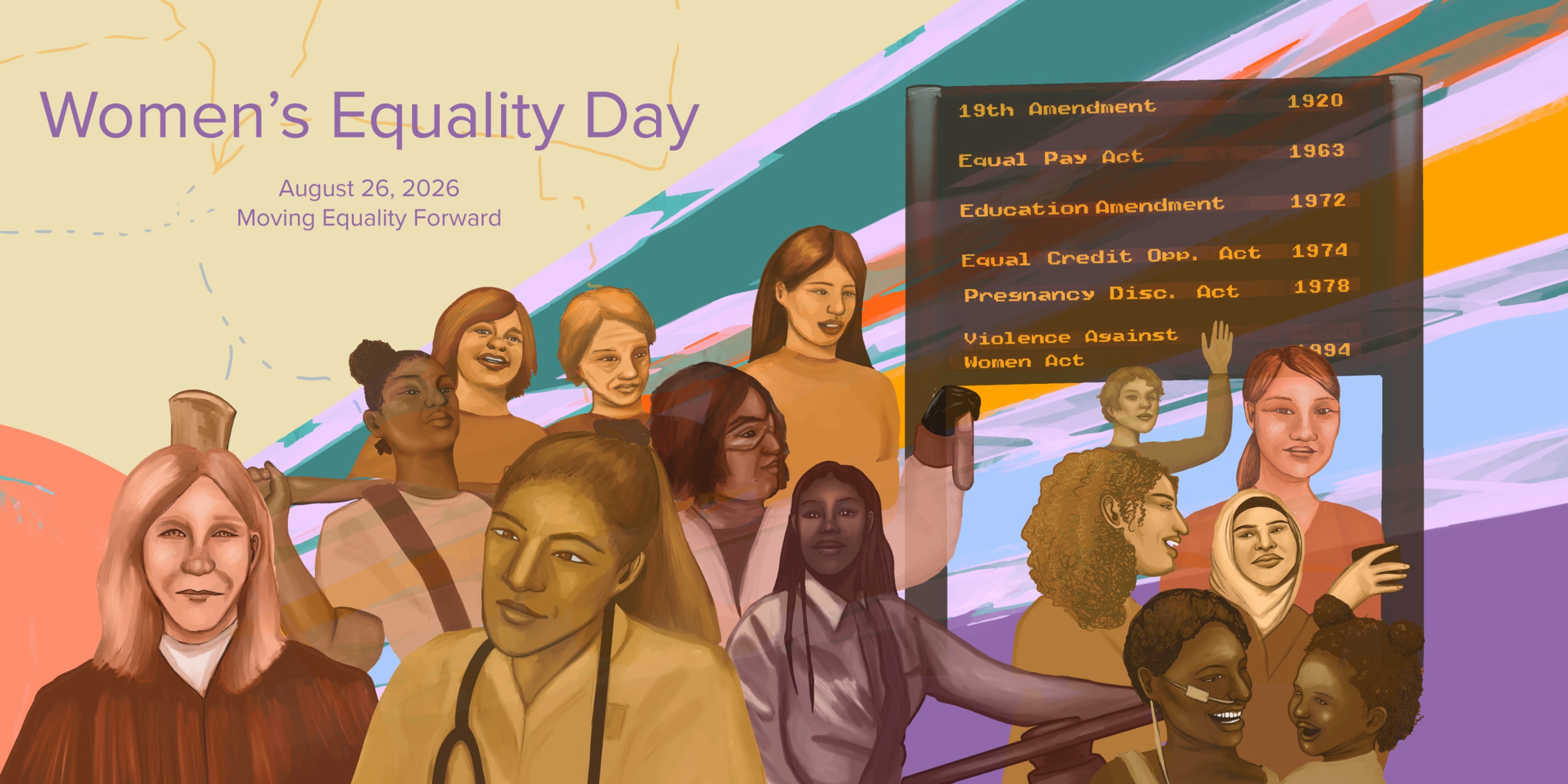
Women’s Equality Day, observed annually on Aug. 26, commemorates the certification of the 19th Amendment to the U.S. Constitution in 1920, which expanded voting rights for women in the United States. The observance also honors the generations of women, advocates, leaders, and changemakers whose contributions have helped advance greater equity in education, employment, leadership, civic participation, transportation, and public life.
The 2026 theme, “Leading the Change: Women Shaping a Sustainable Future,” recognizes the important role women continue to play in strengthening communities and shaping the future. Across industries and professions, women are leading innovation, advancing sustainability, expanding access to opportunity, and helping build communities where more people can thrive.
A legacy of women moving equality forward
The journey toward women’s equality spans generations. Women such as Sojourner Truth, Susan B. Anthony, Elizabeth Cady Stanton, Ida B. Wells, and Mary Church Terrell were among the many advocates who challenged barriers to women’s political and civic participation. Their work, along with the efforts of countless others, helped build momentum for the ratification of the 19th Amendment.
While the 19th Amendment represented a significant milestone, equal access to voting did not immediately extend to all women. Black women, Indigenous women, Asian American women, Latina women, and other women of color continued to encounter discriminatory laws and institutional barriers. Their continued advocacy helped broaden the movement for voting rights and equality in the decades that followed.
The pursuit of equality has also been closely connected to mobility and transportation. Throughout history, women have challenged barriers not only at the ballot box, but also aboard buses, streetcars, trains, and within the transportation workforce.
In 1854, Elizabeth Jennings Graham, a Black educator in New York City, challenged racial segregation after being forcibly removed from a streetcar. Her successful legal case contributed to the eventual desegregation of New York City’s streetcar system.
A century later, public transportation became a defining setting of the Civil Rights Movement. In March 1955, 15-year-old Claudette Colvin refused to surrender her seat on a segregated bus in Montgomery, Alabama. She later became a plaintiff in Browder v. Gayle, the federal court case that helped end segregation on Montgomery’s public buses.
On Dec. 1, 1955, Rosa Parks, an experienced civil rights advocate, also refused to surrender her seat on a Montgomery bus. Her arrest helped spark the Montgomery Bus Boycott. Women such as Jo Ann Robinson and members of the Women’s Political Council were instrumental in organizing and sustaining the movement, demonstrating the powerful connection among transportation access, civic participation, and civil rights.
Women also challenged barriers within the transportation workforce. Before becoming an acclaimed author and poet, Maya Angelou became San Francisco’s first Black female streetcar conductor during World War II, overcoming discriminatory employment practices to enter a field where few women of color were represented.
The movement toward equitable transportation also includes disability rights. Judy Heumann, a pioneering disability rights advocate, spent decades challenging barriers that prevented people with disabilities from fully participating in public life. Her advocacy helped advance accessibility and contributed to the broader movement that led to landmark disability civil rights protections, including the Americans with Disabilities Act.
Women moving communities forward
Women help move communities forward every day — as employees, business owners, caregivers, advocates, customers, community leaders, and transportation professionals. Access to reliable transportation, meaningful employment, economic opportunity, and community resources can help women strengthen their own futures while contributing to stronger families and communities.
At RTD, this connection comes to life through programs and initiatives that expand access and opportunity across the Denver metro region:
- Supporting Equal Employment opportunity: RTD’s EEO and Civil Rights efforts support nondiscrimination and equitable access to employment and advancement, helping foster a workplace where employees can contribute, grow, and lead.
- Connecting women to opportunity: The LiVE income-based fare discount helps make transportation more affordable for eligible customers, supporting connections to employment, education, healthcare, childcare, and other essential destinations.
- Addressing immediate transportation needs: The Transit Assistance Grant (TAG) Program works through eligible community organizations to provide fare assistance for individuals with immediate transportation needs, helping maintain critical connections to services and opportunities.
- Expanding opportunities for small and women-owned businesses: RTD’s small business programs help expand access to contracting opportunities, resources, technical assistance, and business connections — supporting SBE participation while creating pathways for women-owned businesses and other small businesses to compete, grow, and contribute to transportation projects.
Together, these efforts demonstrate that moving communities forward is about more than getting from one place to another. It is about creating connections — to careers, education, resources, economic opportunity, leadership, and one another.
Women’s Equality Day community events and resources
RTD encourages community members and employees to recognize Women’s Equality Day by participating in local events, educational opportunities, and activities that celebrate the achievements and contributions of women. These opportunities provide meaningful ways to learn about the history of women’s rights, recognize the progress made toward equality, and reflect on the continued importance of advancing equitable opportunities for women in our workplaces, communities, and beyond.
Events:
- Women’s History Tour at Center for Colorado Women’s History | 11 a.m.-12:30 p.m. Wednesday, Aug. 26 | 1310 Bannock St., Denver | The Center for Colorado Women’s History will commemorate Women’s Equality Day with an afternoon of community, history, and celebration. The event will feature free first-floor museum tours, live music in the garden, and opportunities for community connection and networking from 11 a.m. to 3:30 p.m.
Resources and Organizations:
- The Women's Foundation of Colorado (WFCO): A community-powered foundation advancing economic equity and opportunity for Colorado women and families.
- Center for Colorado Women's History: Offers year-round exhibits, educational programming, and historical insights into women's trailblazing roles in the state.
- Mile High United Way - Women United: Focuses on community action, early childhood education support, and family basic-needs drives.
- Girls Inc. of Metro Denver: Provides programming and advocacy targeted at empowering young girls to be strong, smart, and bold.
Leading the change
This Women’s Equality Day, RTD celebrates the women — past, present, and future — whose leadership, service, innovation, advocacy, and commitment to community continue to move our organization and region forward. When women have equitable opportunities to move, earn, grow, advance, lead, and thrive, our workplaces, transportation systems, and communities are stronger.