Diversity Spotlight: Dr. King’s legacy in motion and RTD’s journey toward equity and community
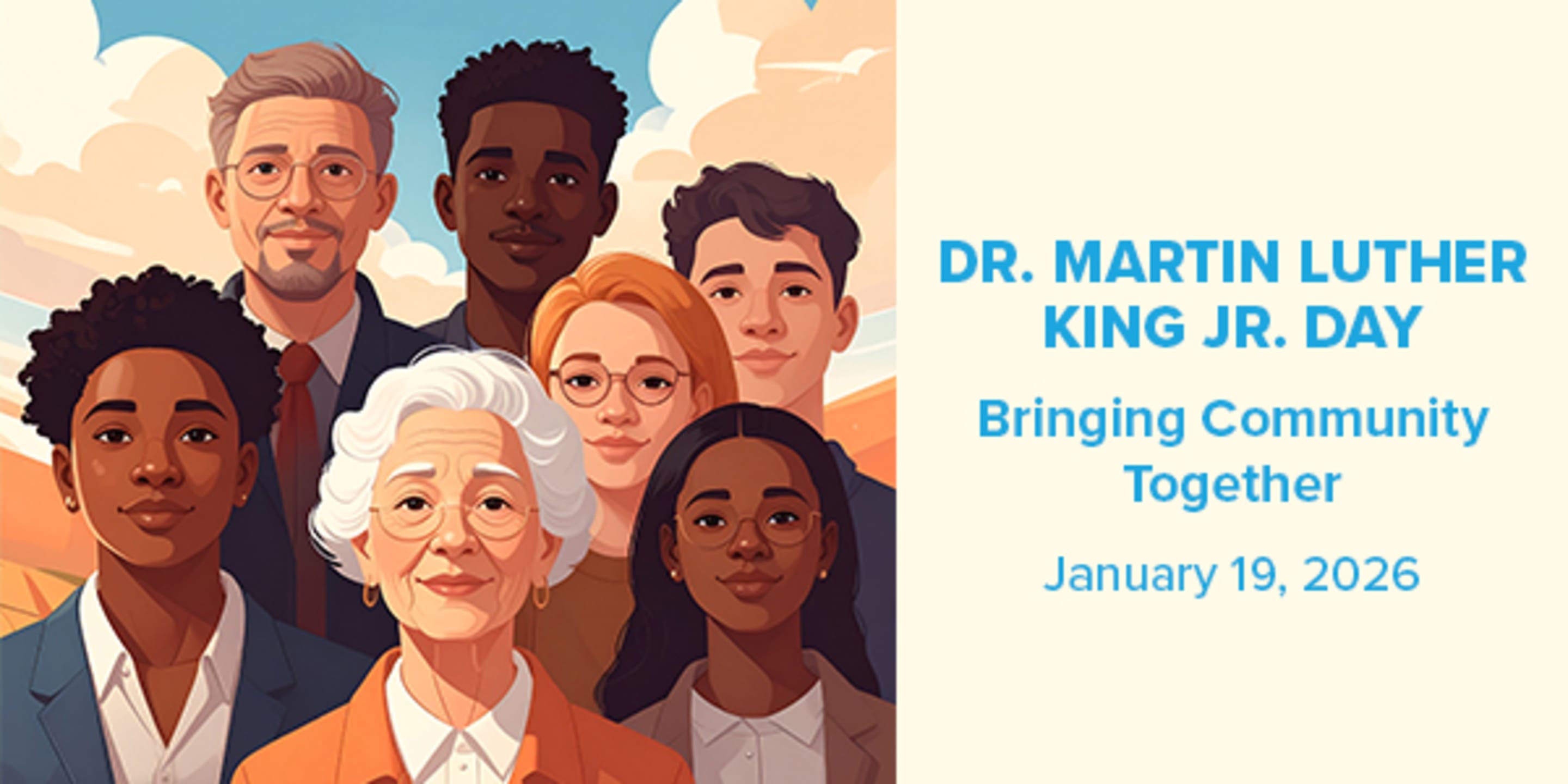
Each January, we honor the life and legacy of Dr. Martin Luther King Jr. — a leader whose vision of justice, community, and nonviolent change continues to guide our collective journey. As RTD observes Martin Luther King Jr. Day in 2026, we embrace the theme Mission Possible II: Building Community, Uniting a Nation the Nonviolent Way, a call to action rooted in Dr. King’s teachings and the belief that progress is both possible and shared.
Dr. King’s pursuit of the “beloved community” reflects a world built on connection, dignity, and opportunity — values that align closely with RTD’s mission to make lives better through connections. Public transportation is more than a service; it is a civil right, strengthening economic mobility, fostering belonging, and providing essential pathways to education, employment, and civic participation. Every day, RTD works to ensure that each customer experiences transportation as a bridge to possibility.
The long road to establishing Martin Luther King Jr. Day
The creation of a national holiday honoring Dr. King was a testament to persistence. Just after his assassination in 1968, Rep. John Conyers Jr. introduced the first bill to create the holiday. For years, Congress declined to move the legislation forward, despite strong community support. Grassroots momentum grew through petitions, marches, coalition building, and cultural influence — including Stevie Wonder’s 1980 anthem “Happy Birthday” — which helped bring millions of signatures to Congress.
The holiday was finally signed into law in 1983, with its first federal observance in 1986. Still, widespread adoption remained uneven until 2000, when every state formally recognized Martin Luther King Jr. Day by name. The long journey to establishing the holiday reflected the determination necessary to advance civil rights.
Colorado’s pioneering leadership
Colorado holds a special place in this national story. In 1984, the state became the first in the nation to establish an official MLK Day — even before the first federal observance. This groundbreaking achievement grew from the unwavering leadership of state legislators and community advocates.
Sen. Regis Groff sponsored and championed the holiday bill in the State Senate.
Colorado State Rep. Wellington Webb, and first African American mayor of Denver, advanced civil rights priorities and helped mobilize support statewide.
Colorado State Rep. Wilma J. Webb, whose tireless dedication reshaped Colorado’s MLK movement, authored and carried the bill through the state legislature. Her leadership also helped transform Denver’s annual Marade into one of the largest MLK Day commemorations in the nation — a living symbol of unity, remembrance, and civic pride. Colorado’s early recognition of MLK Day stands as a testament to the state’s commitment to equity and justice.
Building community through today’s Civil Rights Movement
RTD honors Dr. King’s legacy through a coalition of equity-driven offices committed to advancing justice, access, and opportunity for all communities served across the region.
- Transit Equity Office (TEO) helps embed equity into RTD’s service planning, fare policy structuring, public engagement, and organizational decision-making. Through educational campaigns, Transit Equity Day initiatives, historical storytelling, and community partnerships, TEO amplifies voices that have often been underrepresented in transportation policy. Central to this work is language access, ensuring customers can engage with RTD services, communications, and outreach in ways that are linguistically inclusive and culturally responsive. TEO’s efforts ensure that customers lived experiences — across race, color, national origin (including language ability), income, and culture — inform how RTD defines, develops, and delivers equitable mobility.
- Equal Employment Opportunity Office (EEO) promotes fairness, nondiscrimination, and opportunity across RTD’s workforce. By strengthening inclusive hiring practices, supporting equitable retention and advancement, and ensuring compliance with federal and state employment laws, the EEO Office fosters a work environment grounded in dignity, belonging, and equal access to professional growth — principles Dr. King championed throughout his life.
- Americans with Disabilities Act Office (ADAO) plays an essential role in ensuring mobility for all customers, regardless of ability. ADAO leads accessibility planning, conducts community listening sessions, evaluates systemwide barriers, and partners with disability-oriented organizations to improve access to bus, rail, and facilities. Through outreach events, accessibility walk-throughs, ADA training, and the ADA Community Engagement Request process, the office strengthens RTD’s commitment to full and equal participation. Its work reflects Dr. King’s message that justice must be inclusive, extending dignity and opportunity to individuals whose needs have historically been overlooked. By championing accessibility, ADAO helps ensure that the beloved community includes everyone.
- Small Business Opportunity Office (SBO) advances economic equity by supporting small and disadvantaged businesses throughout the Denver metro region. Through certification guidance, procurement training, outreach events, and partnerships with chambers of commerce and community organizations, SBO helps remove historical barriers to marketplace participation. The office’s work echoes Dr. King’s lifelong advocacy for economic justice, the empowerment of local entrepreneurs, and the belief that communities flourish when opportunities are accessible and equitable. By strengthening pathways for business participation in public contracting, SBO helps ensure that economic opportunity is shared — not concentrated.
Other ways RTD continues its commitment to building community
RTD’s commitment to building the “beloved community” is reflected in strategic, equity-centered initiatives that strengthen mobility, expand access, and ensure that transportation remains a pathway to opportunity for all. One of the most transformative of these efforts is the System Optimization Plan (SOP), which is the agency’s branded Comprehensive Operational Analysis. Adopted in 2022, the SOP realigns transit service based on customer need, community feedback, and equity-driven planning principles. The SOP continues to guide RTD toward a more reliable, accessible, and responsive network that meets the region’s changing mobility patterns.
Through SOP implementation, Route 1 and Route 44 were combined into the new Art District Connector, strengthening cultural and economic connectivity between key arts districts. The W Line extension to the Jefferson County Government Center, paired with increased frequency, further enhances regional access to civic, employment, and community destinations. These improvements demonstrate RTD’s continuing commitment to designing a system that supports meaningful connection.
RTD continues to advance fare modernization through MyRide and Tap-n-Ride with equity and accessibility as foundational design principles. Together, these initiatives expand how customers can pay for transit, recognizing that access to banking, smartphones, and traditional fare media is not universal. MyRide serves as RTD’s central fare platform, offering both a mobile app and physical card that allow customers to manage balances, access fare capping, review trip history, and use multiple payment methods — including the ability to convert cash into stored value at RTD sales outlets and participating neighborhood retailers across the Denver metro area. This cash-to-digital option was intentionally introduced to support customers who are unbanked or underbanked or who prefer to pay with cash, while still providing access to the same fare protections and benefits as electronic payment users.
Complementing MyRide, Tap-n-Ride enables fast, contactless fare payment using a bank card or mobile wallet, helping create a faster, smoother boarding experience, minimizing reliance on onboard cash handling, and improving safety and reliability across the system. Equity considerations — such as ease of use, simpler boarding, compatibility with affordability programs, language access, and customer dignity — were intentionally embedded into both tools. Informed by customer feedback and guided by fare policy structuring supported by the TEO Office in the Civil Rights Division, these initiatives reflect RTD’s commitment to a fare system that is inclusive, flexible, and responsive to lived experience — ensuring customers across income levels, abilities, languages, and technology access can move through the system with confidence and choice.
Another example of RTD’s commitment to strengthening community is the Transit Assistance Grant (TAG) program, designed to address urgent transportation needs by supporting nonprofit and governmental organizations that serve individuals experiencing mobility barriers. In 2025, the program allocated $1 million in funding, distributed through 10-ride ticket books, with eligible organizations receiving up to $50,000 to provide no-cost transit access directly to their clients. Strong regional demand underscored the program’s impact, with approximately 194 applications submitted and 150 organizations selected to receive fare media that helped individuals access essential destinations such as employment, medical care, food resources, education, and housing support.
As RTD enters 2026, TAG continues to serve as a critical equity-focused investment in community mobility. The 2026 TAG application window opened on Dec. 8, 2025, and closed on Jan. 5, 2026, reflecting continued interest from organizations working closest to communities most affected by transportation insecurity. Awardee announcements for the 2026 TAG cycle are expected later in the year, reinforcing RTD’s commitment to transparency, partnership, and sustained community support.
By placing mobility tools in the hands of trusted community organizations, TAG helps reduce immediate transportation barriers while supporting longer-term stability by allowing partners time to assist clients with enrollment in LiVE, RTD’s income-based fare discount program. Together, RTD’s SOP, service enhancements, modernized fare technologies, and the TAG program demonstrate RTD’s continued commitment to building a more inclusive, equitable, and community-centered transportation system — advancing Dr. King’s enduring call to expand dignity, opportunity, and justice for all.
Celebrating Martin Luther King Jr. Day with RTD
As Dr. King’s legacy is honored, RTD invites employees and community members to engage in meaningful acts of service, learning, and connection. Here are some ways to get involved:
- 2026 Convocation | 6 p.m. Jan. 15| Macky Auditorium, Boulder:
A community-wide convocation exploring the future of equity and collective care through an Afro-Futurist lens. The 2026 keynote speaker is Dr. Ibram X. Kendi, acclaimed antiracist scholar, historian, and author. The theme, “Imagining Tomorrow: Afro-Futurist Visions of Community, Creativity, and Collective Care,” invites participants to reflect on justice, innovation, and shared responsibility for building inclusive futures. - Martin Luther King, Jr. Tribute & Humanitarian Awards | 7:30 p.m. Jan. 13 | Boettcher Concert Hall, Denver: An awards ceremony recognizing individuals and organizations whose leadership advances equity, justice, service, and positive social change.
- MLK Peace Breakfast | 8:30-11 a.m. Jan. 16 | Mile High Station: An annual gathering promoting Dr. King’s values of peace, justice, and equality, featuring an awards ceremony recognizing community leaders and a keynote address by Erika Alexander, activist, entrepreneur, and co-founder of Color Farm Media.
- MLK Freedom Run | 7:30-11:30 a.m. Jan. 17 | Piney Creek Hollow Park: A community race offering 5K, 10K, and Half-Marathon distances, promoting health, unity, and civic engagement.
- MLK Marade (Parade & Walk) | 9:30 a.m.-1 p.m. Jan. 19 | City Park to Civic Center Park: A 3-mile community walk beginning near the MLK Memorial, offering a meaningful opportunity to honor Dr. King’s legacy through collective action.
- MLK Jr. African American Heritage Rodeo | 6 p.m. Jan. 19 | Denver Coliseum: A family-friendly event celebrating Black cowboy history and Western heritage in honor of Bill Pickett, featuring professional rodeo competitions and cultural performances.
- Denver Botanic Gardens Free Admission Day | Jan. 19 | York Street and Chatfield Farms: Free admission in honor of MLK Day, inviting community members to reflect, connect, and enjoy nature, supported by SCFD.
A call to unity and action
Dr. King taught that “the time is always right to do what is right.” As we observe Martin Luther King Jr. Day in 2026, we are called to actively build the world he imagined — one rooted in justice, shared humanity, and nonviolent leadership.
RTD honors Dr. King and the Colorado leaders who championed his legacy, by strengthening community partnerships, expanding equitable mobility, and ensuring that every customer feels valued and connected. Through our collective work, we move closer to making Mission Possible II a lived reality:
Building community.
Uniting our nation.
Advancing progress the nonviolent way.
Diversity Spotlight recognizes special observances set forth by presidential proclamation, executive order, and public law, and in keeping with RTD’s commitment to diversity, equity, inclusion, and belonging. Please note that participation in these activities is voluntary and unpaid. Supervisor approval is required to participate if events occur during a regularly scheduled shift.