RTD’s top 10 milestones of 2025 that improved service, safety, and customer experience
Denver (Dec. 29, 2025) – As the new year approaches, the Regional Transportation District (RTD) is celebrating and reflecting on the agency’s accomplishments in 2025 providing meaningful progress on the services, infrastructure, and safety measures customers rely on every day. With a continued focus on reliability, accessibility, and creating a Welcoming Transit Environment across the Denver metro area, these successes show how RTD is incorporating feedback from the community to deliver practical improvements that customers can see and feel every trip.
#1 Launch of Tap-n-Ride
RTD’s November launch of Tap-n-Ride significantly simplified how customers pay their fare by allowing them to tap a contactless Visa or Mastercard credit or debit card or mobile wallet directly at bus and rail validators. The new method makes paying fare easier by removing the need to carry cash, visit ticket vending machines, or purchase fare in advance.
To streamline the process further, automatic fare capping ensures customers always pay the lowest possible fare for their trips while maintaining access to discounts through MyRide. Through the addition of Tap-n-Ride, RTD is aligning the agency with modern payment options customers already use, improving accessibility, reducing boarding delays, and creating a more reliable transit experience across the system.
#2. Downtown rail reconstruction at Kalamath completed
The successful on-time completion of light rail reconstruction at the Kalamath Street crossing strengthened the reliability and safety of one of RTD’s busiest corridors, directly benefiting customers through smoother rides and more dependable service. As part of the multi-phased Downtown Rail Reconstruction Project, notable improvements include 2,400 combined feet of replaced track, upgraded pedestrian crossings, and improved station accessibility.
Completing the work on schedule helped minimize long-term service disruptions, and RTD’s extensive outreach ensured customers and community partners stayed up-to-date throughout construction. The investment supports consistent light rail operations and reinforces RTD’s commitment to maintaining its oldest rail assets for years to come.
#3. Improvements in customer experience
RTD’s 2025 customer and community survey results show meaningful year-over-year improvements in how customers experience transit across the system. Double-digit gains in overall satisfaction, perceptions of personal security, and on-time performance demonstrate progress in areas customers value most. Meanwhile, bus and rail services exceeded national averages in nearly every comparative category.
These results are reinforced by operational improvements such as expanded Digital Customer Relations hours, which provide customers with more consistent, real-time information and support during service disruptions. Together, these underscore RTD’s renewed commitment to enhancing the customer experience, while making it easy and fast for customers to get the help they need.
#4. 16th Street FreeRide return to full service
With frequent shuttles running every few minutes, no-cost transit returned to the heart of downtown Denver when the 16th Street FreeRide fully resumed service in October. Shuttles run the entire length between Union Station and Civic Center Station, and customers once again have reliable connections to major bus and rail services, jobs, businesses, and civic destinations along the corridor. The completion of the 16th Street reconstruction enhanced safety, accessibility, and comfort, while eliminating detours that added time and confusion for customers. Strong ridership growth following the reopening underscores the FreeRide’s role as a vital asset that supports economic activity downtown and makes it easier for customers to move through the city.
#5. Restoration of full speeds on the D Line
The removal of the final speed restriction on the D Line in April improved travel times and reliability for customers by allowing trains to resume regular operating speeds along the corridor. Lifting the restriction reduced delays, helping customers reach their destinations more predictably. The work reflects RTD’s focus on maintaining safe rail service through proactive track inspections and targeted repairs, while minimizing customer impacts whenever possible. This milestone represents tangible progress toward a faster, more consistent light rail experience as RTD continues addressing aging infrastructure across the system.
#6. Bus and rail services expanded for more frequent trips
RTD is dedicated to providing transit that best meets the evolving needs of its customers. That’s why May service changes added 27,000 in-service hours and reinstated popular routes such as the Free MetroRide to deliver more frequent trips, longer operating hours, and improved reliability for customers across the district. Schedules were adjusted across multiple bus and rail lines to make transit a more practical option for daily travel via reduced delays and more consistent on-time performance.
#7. Public safety investments fostering a Welcoming Transit Environment
Transit Police delivered measurable improvements by increasing transparency, strengthening policing capabilities, and reducing unwanted activity at stations. The launch of a security metrics dashboard gave customers clearer insight into safety trends and showed significant declines in security-related calls. At the same time, the creation of RTD’s in-house Transit Police Detective Bureau improved the agency’s ability to investigate crimes, support victims, and respond more quickly and consistently across the district. Operational changes such as the expanded elevator program further supported sharp reductions in incidents and maintenance calls. These efforts advanced RTD’s goal of creating a Welcoming Transit Environment where customers feel safer, better informed, and supported throughout their journeys.
#8. Expanded community mobility through partnership program
As a trusted leader in transportation across Colorado, RTD understands the need to seek solutions and fill service gaps for customers where traditional transit may not fully meet community needs. The third round of Partnership Program funding expanded travel options for customers by supporting locally designed services that better connect people to buses, trains, and key destinations. The added funding increases access for customers in equity zones, improves connections to RTD stations, and offers more flexible, no-cost or low-cost options for everyday trips. These partnerships translate into more choices, along with shorter and easier connections tailored to the places customers live, work, and travel.
#9. N Line marks five years of reliable service
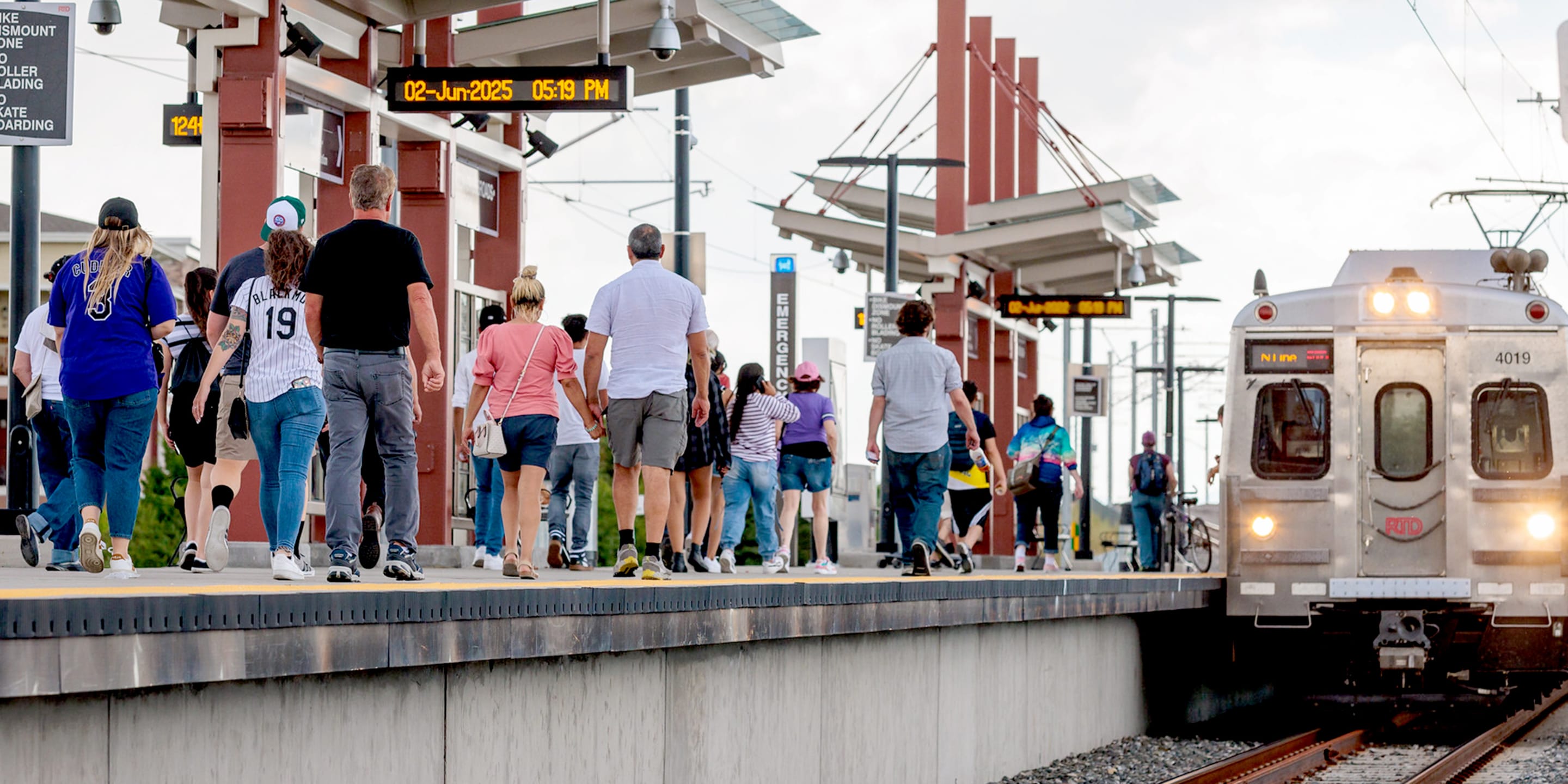
The N Line’s fifth anniversary highlights a dependable commuter rail option that has consistently delivered safe, on-time service for customers by connecting Adams County communities to downtown Denver. After opening during the height of the pandemic, the N Line has grown into one of RTD’s strongest performers, with on-time performance near 97% in recent years. The N Line offers reliable access to jobs, major events, and regional destinations such as the National Western Center, while reducing congestion and parking demands. The milestone reflects how RTD’s focus on safety, training, and operational excellence continues to translate into a predictable, high-quality experience for customers.
#10. Reopening of Boulder Junction at Depot Square Station
The reopening of Boulder Junction at Depot Square Station delivered a more-connected transit network to support Boulder’s growing transit-oriented neighborhood through routes to regional services. This was achieved by expanding access through the FF4 route serving Denver’s Wade Blank Civic Center station, as well as the AB2 to Denver International Airport. The return of services gave customers more choices and more direct connections for work, travel, and weekend trips.
All of these accomplishments demonstrate RTD’s ongoing commitment to making lives better through connections. By investing in people, partnerships, and the systems that move the region, RTD continues to strengthen trust with customers and delivers a transit experience that supports them where they live. As the agency looks ahead to 2026, this work provides a strong foundation for continued improvements and opportunities to support customer satisfaction.